




Jasmine Rice vs Basmati Rice: What's the Difference, and How to Cook Each One Perfectly
Stand in front of the rice shelf and the two names you'll see most often are jasmine and basmati. They're both long-grain, both fragrant, and both staples in millions of kitchens - yet they behave completely differently in the pot and belong to completely different meals. Here's how to tell them apart, when to use which, and how to cook each one so it comes out perfect every single time.
The quick answer
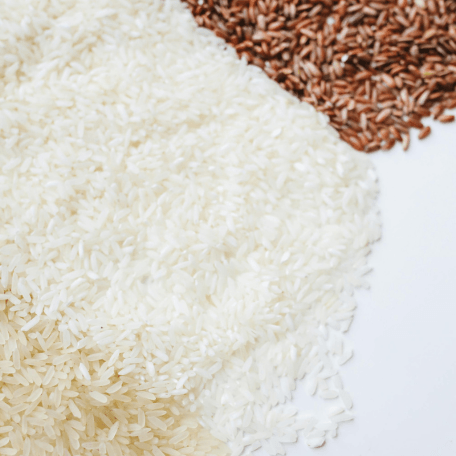
Jasmine rice is soft, slightly sticky, and subtly sweet - the rice of Thai curries, stir-fries, and Southeast Asian cooking. Basmati rice is dry, fluffy, and separate, with grains that elongate as they cook - the rice of biryani, pilaf, and South Asian and Middle Eastern cooking. Neither is "better." They're built for different jobs.
Where they come from
Jasmine rice (khao hom mali, or "fragrant rice") is grown primarily in Thailand, where the humid climate gives it its signature floral aroma - often compared to pandan leaves or lightly buttered popcorn. Basmati is grown in the foothills of the Himalayas across India and Pakistan, and true basmati is aged for months after harvest, which dries the grain and deepens its nutty, almost popcorn-like fragrance. The word basmati itself means "full of aroma."
Texture: the real difference
This is where your dish is won or lost.
Jasmine grains are plumper and carry more amylopectin, the starch that makes rice cling together softly. Cooked jasmine is tender and just sticky enough to scoop with a fork or hold together under a ladle of green curry.
Basmati grains are longer, thinner, and higher in amylose, the starch that keeps grains firm and separate. Properly cooked basmati nearly doubles in length and every grain stands on its own - which is exactly what a biryani or pilaf demands, where sauce should coat the grains, not glue them.
A simple rule of thumb: if the dish is saucy and you want the rice to soak and cradle it, choose jasmine. If the rice itself is the star and needs to stay light and distinct, choose basmati.
Aroma and flavour
Jasmine is floral and faintly sweet; basmati is nutty and savoury. Both lose fragrance with age, so buy from a source with good turnover and store rice in a sealed container away from heat and light. (Bulk buyers: a food-grade bucket with a gamma lid in a cool pantry keeps a 50 lb bag fresh for many months.)
How to cook jasmine rice (stovetop, foolproof)
Jasmine needs less water than the package usually says. Too much water is the number one reason jasmine turns to mush.
- Rinse 1 cup of jasmine rice in cold water 2–3 times, until the water runs mostly clear. This removes surface starch and prevents gumminess.
- Combine the rinsed rice with 1¼ cups of water and a pinch of salt in a pot. (Yes - a 1 : 1.25 ratio, not 1 : 2.)
- Bring to a boil uncovered, then immediately drop to the lowest heat, cover with a tight lid, and simmer 10–12 minutes. Do not lift the lid.
- Rest off the heat, still covered, for 10 minutes. This step finishes the cooking with trapped steam.
- Fluff gently with a fork and serve.
Perfect alongside Thai curries, teriyaki, stir-fried vegetables, or simply with a fried egg on top.
How to cook basmati rice (stovetop, restaurant-fluffy)
Basmati rewards one extra step: soaking. It's the difference between good and spectacular.
- Rinse 1 cup of basmati 3–4 times until the water runs clear.
- Soak in cold water for 20–30 minutes, then drain well. Soaking lets the grain elongate fully and cook evenly.
- Combine with 1½ cups of fresh water and a pinch of salt. Add a teaspoon of butter or ghee and a couple of whole cardamom pods or a small cinnamon stick if you want pilaf-level aroma.
- Boil, then simmer covered on the lowest heat for 12 minutes.
- Rest covered and off the heat for 10 minutes — no peeking.
- Fluff with a fork; the grains should be long, dry, and completely separate.
Perfect under butter chicken, dal, kebabs, or as the base of biryani and pulao.
Common mistakes with both
- Skipping the rinse - surface starch equals gluey rice, whichever variety you use.
- Lifting the lid while simmering - every peek releases the steam doing the work.
- Skipping the rest - rice straight off the heat is wet at the bottom and firm on top; ten covered minutes evens it out.
- Stirring during cooking - stirring ruptures the grains and releases starch. Set it and leave it.
Nutrition, briefly
White jasmine and white basmati are nutritionally similar - mostly carbohydrate with modest protein. Basmati has a somewhat lower glycemic index than jasmine, which some people watching blood sugar prefer. For more fibre in either style, brown versions of both keep the bran layer intact (they need more water and roughly double the cooking time) - our Organic Brown Basmati Rice is a good place to start.
Buying in bulk
Because both varieties keep well when stored properly, buying larger formats drops your cost per kilogram significantly - and you'll never run out mid-recipe. We stock certified organic Jasmine Rice – White and White Basmati Rice – Naturally Pure in sizes from pantry bags up to 50lbs, shipped across Canada - free shipping on orders over $99.99. Browse the full range of organic rice and grains for black rice, wild rice, quinoa, and more.
Purely Organic Foods is a family-owned Canadian company based in Surrey, BC, supplying certified organic staples, spices, and superfoods in bulk and small sizes since 2021.